Templar Games
  • Home
  • News
  • Background Lore
  • Projects
  • Contact

Background Lore

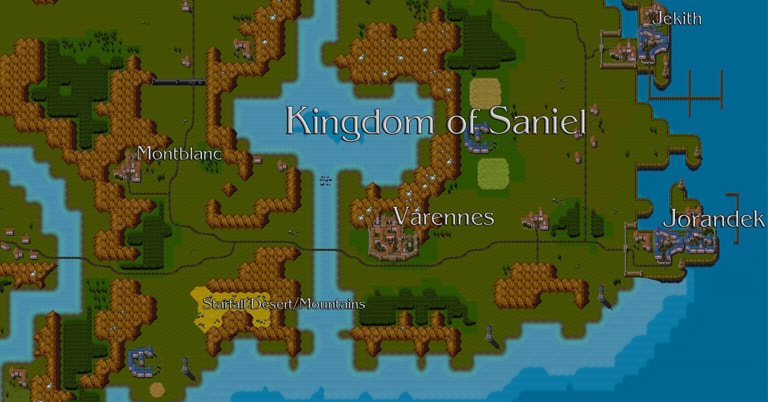
Politics - Saniel

8/2/2021

Comments

 
Picture
Picture
Basic Info

Population: Approx. 12 million

Founded: AF 1

Government: Constitutional Hereditary Monarchy
​
King: Charles VII

Capital: Varennes

Symbol: A mountain, unbroken, with a star shining above

Language: Sançais

Local currency: Mark

Religious makeup: 48% Ascensionist, 21% Universalist, 9% Druid, 8% Zu-Xi'an, 14% Other/None


Origins

In the dark days of the Fall, the Solar Alliance military forces stationed in this system battled valiantly to stop the Great Enemy from razing everything. Although they failed to save Belladrix, and Terranis came perilously close to ruin, at the last they were able to achieve victory against the demons. Now bereft of most technology, the surviving military forces began to forge a new nation, offering both protection and leadership for the surrounding areas.

They were led by Grand Admiral Renoir du Saniel, a charismatic officer whose subordinates followed him almost fanatically. He was popular among some elements of the civilian population as well, and some had even nicknamed him “king” before the Fall. Perhaps inspired by this, after the Fall, he dissolved the Solar Alliance upon Terranis and declared himself King Renoir I of a new nation, Saniel. The base camp used by the military turned into a new a city, Varennes, named after Renoir's birthplace on Old Earth. Those who were once senior officers of the military retained their positions, but as the beginnings of a new class of nobility, answerable only to the King.

The first generations of Saniel were hard-fought but ultimately prosperous. The outbreak of the First Barbarian Wars only a matter of decades after the Fall were a trying time as whole cities were burned, and many of Saniel's newfound allies were destroyed. Ultimately, however, the nation would prevail. The leadership provided by the King and nobility during the conflict would also further cement their rule and structure, ensuring the system would endure to the modern age.


Later History

After attaining victory in the First Barbarian Wars, Saniel would spend several decades rebuilding and rearming. Knowing further threats were beyond its borders, in the 2nd century it began a series of aggressive expansionist campaigns, purging the surrounding areas of Great Enemy and barbarian presence, and expanding its borders almost exponentially. By the mid-2nd century, the campaigns were declared complete, and Saniel entered into a new age of peace.

This peace would nearly spell the nation's downfall, but not from an external threat. King Reynald I, seeing little need for as massive a military as Saniel had, began to systematically disarm the nation and funneled much of the money into “civic projects” that provided some improvements to life for all citizens, but were largely spent on more superfluous needs like courtly parties that were, according to rumors, little more than orgies. Indeed, the debauchery in Varennes eventually reached such a fevered pitch that the Lustlord Lucifon was able to break into our reality, and laid siege to Varennes with a demon army. This was the first of only two times in Varennes' history that it was threatened with destruction. Luckily for the beleaguered city, a lone warrior named Doramor was able to slay Lucifon in single combat, throwing the demon army into disarray and breaking the siege.

Afterwards, King Reynald realized the depth of his mistakes, and began to attempt repairs of the damage he had done to the nation. It would take nearly a century until Saniel was restored to its previous state. Launching new expeditions beyond its borders to the west, Saniel came into contact with the country of Kaldoris, whom it quickly allied with, only to find itself at war with soon after in the Tritanium War.

Although Saniel had made reparations after the war to improve relations with other nations on Terranis, things quickly turned to war again as the Bastion Wars erupted for control over Daeldren. It was a Saniel force that launched the first attack which began the conflict, Saniel forces that were victorious in the Battle of Frostrock Pass, devastating Doramor's forces, and Saniel that saw humiliating defeat at the hands of only six paladins of the Order of Light.

Following the Bastion Wars, as a global society began to form, Saniel's stubborn pride started to give way to pragmatism, and it worked to improve relations. The first major action towards this goal was to lend aid to Saernis' defense in the Dragon War. Later they would also ally with Weijin and the Twinned Cities in the Second Barbarian Wars.

By the 6th century, society was beginning to shift once again in Saniel. Whether due to witnessing the effects of the War of the Thrones in Doramor, or simply wishing to increase their own power, the nobles of Saniel began to increasingly push for reforms that would make the King less of an absolute authority, or at least accountable in some way should he commit an act deemed not in the best interest of the country. This sentiment had been growing for likely a century or more, but reached a head in the mid 6th century when the Charte de L'egalite, or “Charter of Equality”, was signed.

In the late 7th century, Saniel would face the greatest threat to its existence in the Third Barbarian Wars. Hostile barbarian nations had grown to considerable power in the regions that used to be Kaldoris, and several minor lords on the fringes of the country even led their territories in rebellion. Eventually, the armies of Aranok the Ravager drove so deep into Saniel that Varennes itself was besieged. Although Saniel was ultimately victorious, the devastation of the conflict was used by the nobility as further evidence of the weakness of the King, and they negotiated additional concessions.

This trend of the nobility attempting to further absorb to King's power continued until the early 10th century, when King Renoir III ascended the throne, ostensibly as little more than a puppet of the nobility. However, he enacted numerous plans that took years to come to fruition, and, by the time he was done, the majority of the most influential noble houses had been destroyed, breaking their hold over the throne and the country. For the first time in centuries, the ruling power of Saniel was again concentrated almost entirely in the King, and Renoir's reforms saw it return to a state not dissimilar to that of King Renoir I's reign, when he led with zeal and all his subjects passionately followed his rule.

Since then, while the noble houses still exist in some form, their loyalty to the throne has been all but absolute. King Renoir's reforms also saw fundamental transformations at all levels of Saniel's society. Where once commoners were, in many cases, vassal serfs of their lords, they now enjoyed unprecedented levels of freedom. A commoner ascending to the nobility was not unheard of prior to this, but the rate of occurrence dramatically increased.

The current King is Charles VII, aged 52 [40]. Although Saniel has traditionally been a proponent of the Terranis Union, in the last twenty years, relations with the Weijin Empire have continued to decline, in part due to personal conflicts between King Charles and Emperor Li. While King Charles married Jun-Zhen, the eldest daughter of the Emperor several years ago, ostensibly to improve relations, rumors persist that it was in fact to cover up the King impregnating the girl during a state visit. She was only 25 [19] at the time of their wedding, and it was announced she was with child almost immediately after, giving birth to Crown Prince Abelard in time. Several villages along the border with Weijin have recently been attacked and destroyed as well, though the Empire denies any involvement. War between the two nations seems all but inevitable.

​

Culture/Economy

As the oldest nation still in existence on Terranis, Saniel has a tremendous sense of history and pride. Tradition and custom are a centerpoint in Sançais culture, perhaps most exemplified by the class system that has existed since its inception. Originally an extension of the officer corps that led the Solar Alliance military, these nobles have continued to enjoy heightened privilege and status compared to the commoners. Although bloodlines are the primary factor in establishing a House, it is not unheard of for a commoner to rise to noble status through exceptional deeds or accumulation of wealth, especially as some of the existing Houses are destroyed in war or intrigue.

In the last two centuries, Saniel has begun to undergo dramatic shifts in culture. This shift has accelerated in the latter century after King Renoir III's reforms, and commoners now have a greater degree of freedom than ever before in country's history. In past ages, commoners were frequently limited by their local rulers in a variety of ways, up to and including full serfdom. Many of these restrictions have been rescinded, so a citizen is free to pursue whatever occupation they desire, or travel as they please. As the country has grown more prosperous, the standard of living has continued to increase, with many normal citizens now at a level of wealth their forebears could only dream of. Dozens of new villages and towns have been founded in the last century as many commoners seek to strike out on their own (although taxes are still expected by whatever House whose lands they've settled in). As a result, the wild and untamed frontiers of Saniel have seen a greater level of civilization than ever before.

Despite the recent cultural shifts, many traditions still persist on local and national levels. De Tournoi, a large combat tournament, is held every year in Varennes as part of the Spring Festival, continuing a tradition almost as old as Saniel. Locally, day-to-day traditions are still observed, particularly in older cities and towns, ranging from simple things such as drinking a specific vintage of wine with a meal to formal courtship rituals.

Economically, Saniel is largely self-sufficient, but relies on trade, primarily with Weijin, Jorandek, and Korneth to fill assorted needs it can't handle. Remnant pre-Fall items from Korneth are particularly popular imports. Conversely, Saniel exports a number of goods much in demand elsewhere. Its wines and ales rival those of Saernis and Doramor despite the harsher climate, and, perhaps due to exacting standards of the nobility, it boasts some of the finest crafted weapons and armor on Terranis.


Sources:
  • Collected Accounts of the Fall - (Gaspard Venier, 82)
  • The Legend of Lucilia Doramor - (Unknown, Unknown)
  • Notes and Journals of the Bastion Wars - (Assorted, various)
  • Interviews with Citizens of Saniel - (Self, 1013-1014)

comments powered by Disqus

    Categories

    All
    Geography
    Great Enemy
    Politics/Religion
    Templarverse
    Templarverse History
    Terranis

    RSS Feed

Home
News
Background Lore
Projects
About
Contact
Itch.io Page

​
© COPYRIGHT 2018 TEMPLAR GAMES.
​ALL RIGHTS RESERVED.
  • Home
  • News
  • Background Lore
  • Projects
  • Contact